



Shredder machine are mechanical devices widely used in industrial applications. Their diverse types and functions meet the material handling requirements of various industries. They are often described as capable of shredding ‘anything and everything’. Ranging from basic blade-type shredders to more complex shear-type and single-shaft shredders, each type has its own unique operating principle and long-standing applications. Below are several common types of shredders.
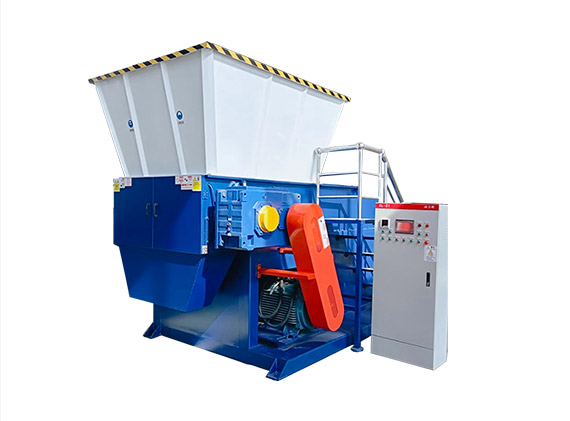
Its core operating principle is based on the mechanical action of a single-shaft rotation combined with blade shearing. A single-shaft shredder consists of a rotating cutter roller, stationary blades, a rotating main shaft, a drive unit, a gearbox and a feed hopper. The gearbox controls the rotational speed within a reasonable range, driving the rotating cutter assembly and stationary blades to create a shearing force field. Material is fed through a hydraulic feed mechanism. The material is fed into the hopper, where it is gripped by the rotating moving blades. It is gradually shredded through the squeezing and tearing action of the moving and stationary blades. Finally, particles meeting the required size specifications are discharged through the bottom screen. Suitable for processing: plastics, fibrous textiles, circuit boards, lithium-ion battery packs, etc.
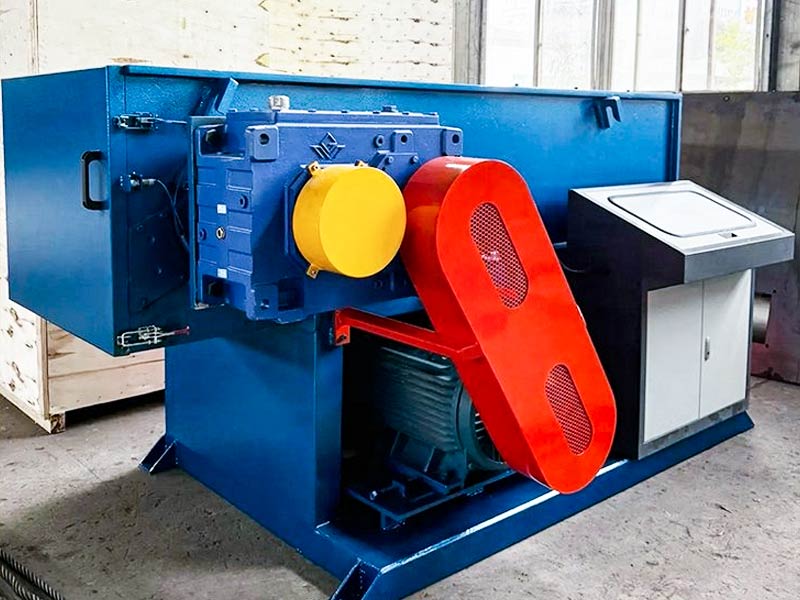
Single-Shaft Shredder Machine
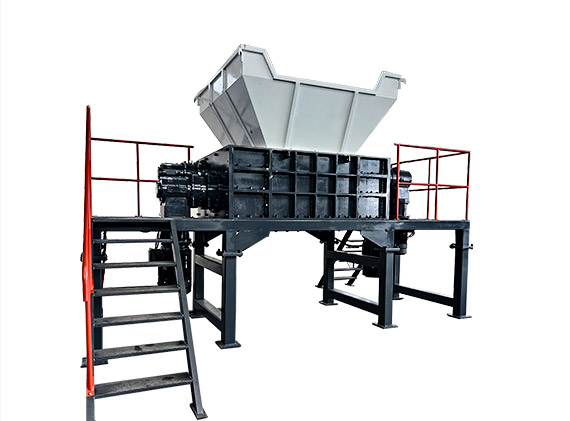
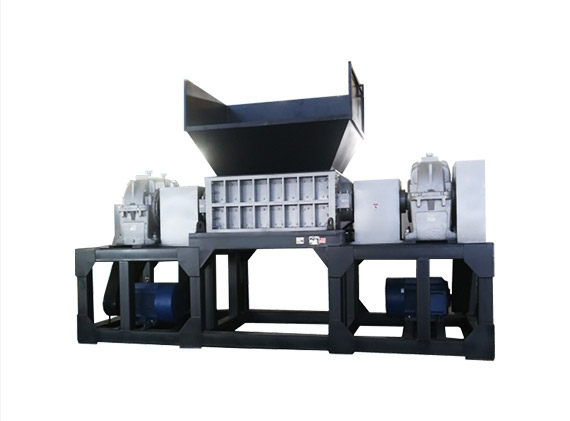
This unit is equipped with two independent motors. A synchronous drive mechanism drives two rows of parallel guide rollers. Unlike the unidirectional rotation of a single-shaft shredder, the twin-shaft cutting rollers apply shearing force to the material through a ‘counter-rotating interlocking’ mechanism. Compared to material being torn by blades rotating in a single direction, this significantly enhances the shredding capacity for large, hard materials. High-strength alloy steel blades are evenly distributed across the surface of the cutting rollers. The twin-shaft shredder is the most widely used type of shredder. It is suitable for a wide range of materials, including plastics, wood, tyres, rubber, waste furniture and metals. The thickness, angle and spacing of the blades can be adjusted according to the specific material type.
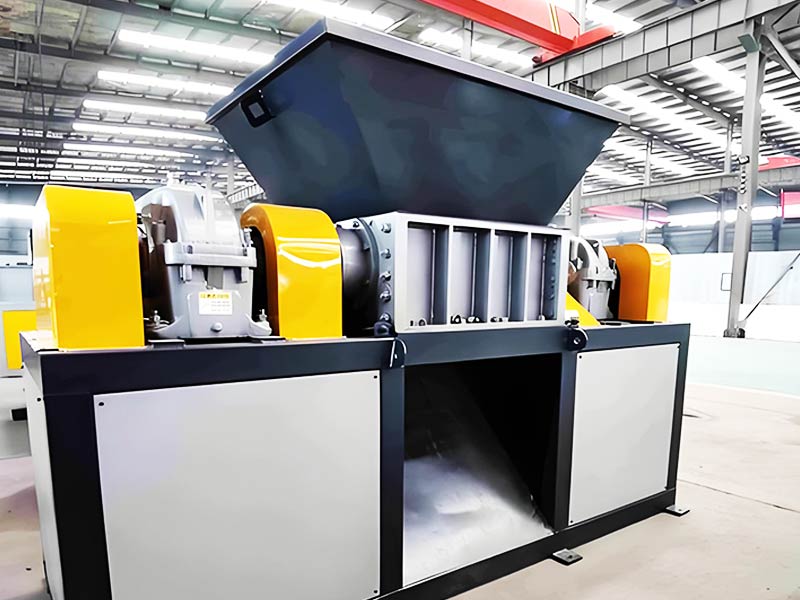
Twin-Shaft Shredder Machine
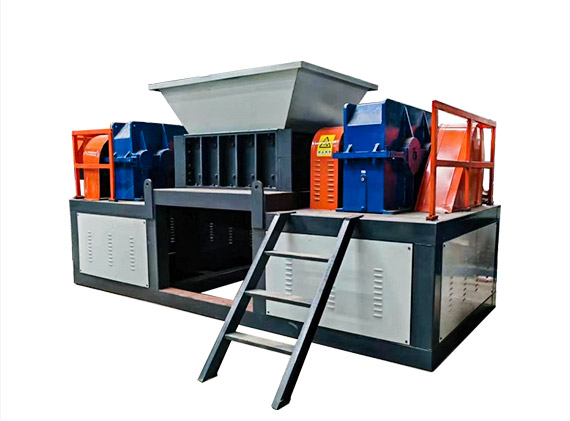
Its core components consist of four parallel shafts that operate in unison. These shafts are typically precision-engineered from high-strength alloy steel. Each shaft is fitted with a variety of cutting tools of different shapes and complementary functions. Common types include hook blades, serrated blades and flying blades. These tools are usually arranged on the shafts in specific helical or staggered patterns. As the shafts rotate, the blades form a complex and highly efficient shredding matrix. The upper hook blades grasp and pull the material, drawing it into the shredding zone. The serrated blades primarily subject the material to powerful shearing or tearing forces. The flying blades, rotating at high speed, impact the material to break it down. This four-shaft shredder can easily handle materials of various properties and shapes. Their applications are extensive, covering materials such as plastic drums, thermal break aluminium, scrap metal, discarded furniture, plastic offcuts, household appliances, refuse and waste timber.
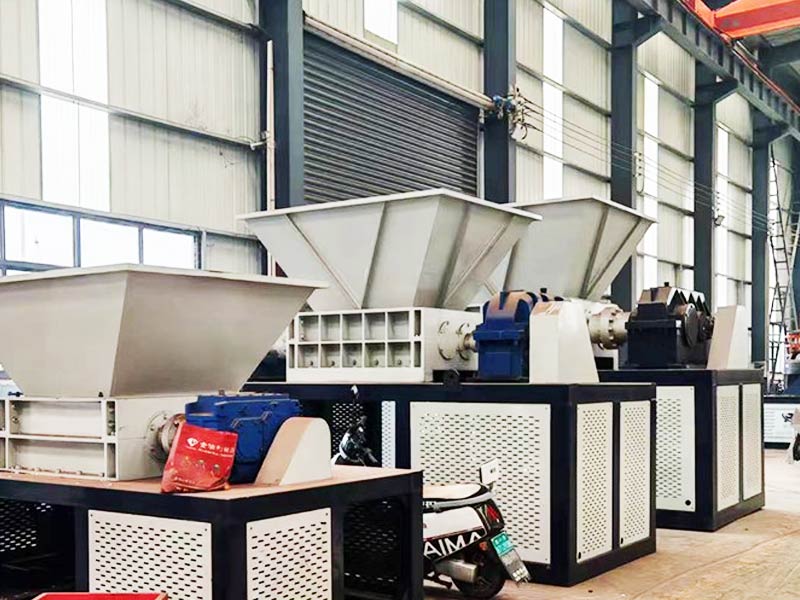
Four-shaft Shredder Machine
In summary, shredders are among the most important pieces of equipment in the industrial sector. With their diverse types and functions, they provide effective solutions for processing a wide range of materials. When purchasing a shredder, it is essential to select the appropriate type based on the specific properties of the material and the processing requirements. This ensures the shredder operates efficiently and achieves optimal shredding results.
The URL for this article is: https://www.victorsmachine.com/company-blog/what-are-the-three-types-of-shredders/ Please credit the source when reposting. Thank you.
We know how to get energy from waste. Let’s build better future for everyone, together !
Victor Machinery is a manufacturer of machinery and equipment. The main products are: shredder, crusher, carbonization furnace equipment, mining equipment, recycling machinery, etc.
Our ever-evolving offering for mining and construction covers crushing, screening, breaking, demolition, and service solutions – designed to increase productivity and boost your bottom line.
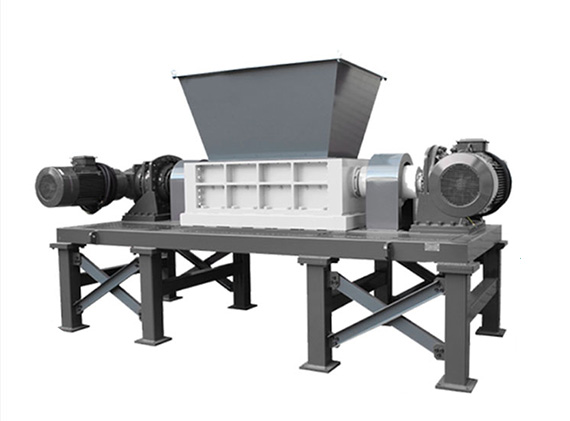 Double Shaft Shredder Machine
 Single Shaft Shredder Machine
 Four Shaft Shredder Machine
 Tyre Shredder Machine
 Metal Shredder Machine
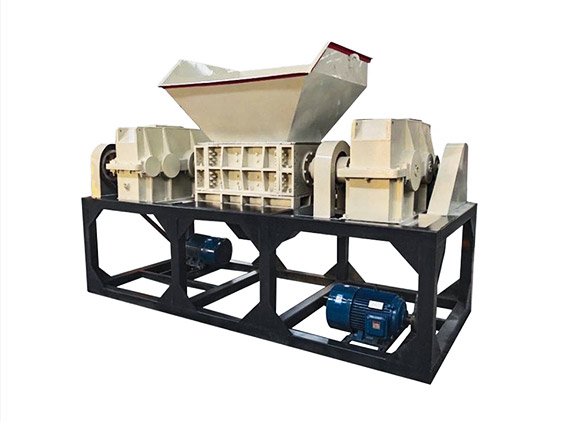 Wood Shredder Machine
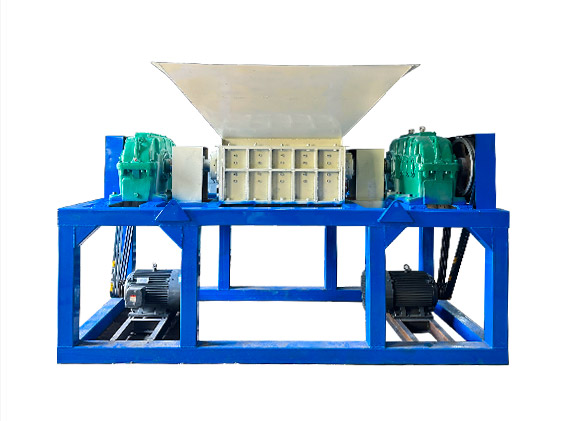 Plastic Shredder Machine
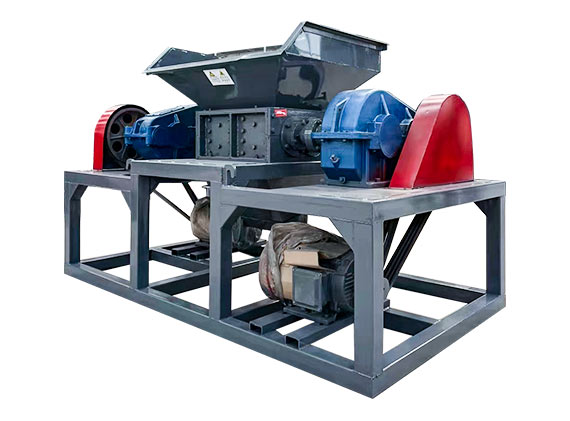 UBC Aluminum Can Shredder Machine
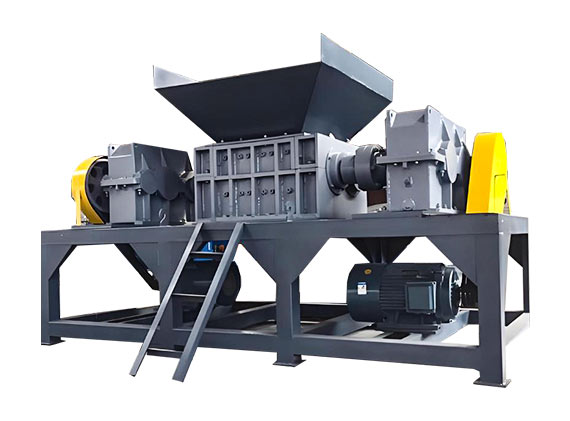 Lithium-ion Battery Shredder Machine
 Mini Small Jaw Crusher
 Jaw Crusher
 Cone Crusher
 Impact Crusher
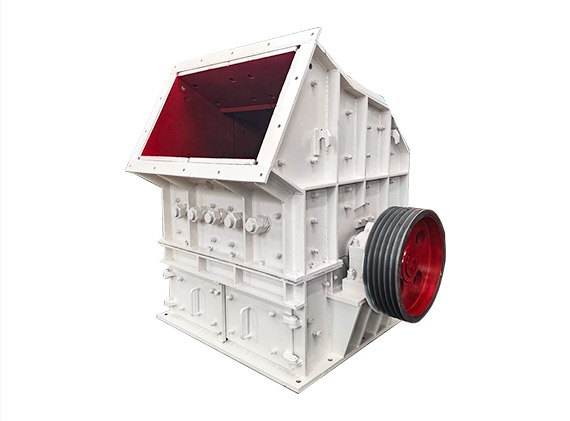 Hammer Crusher
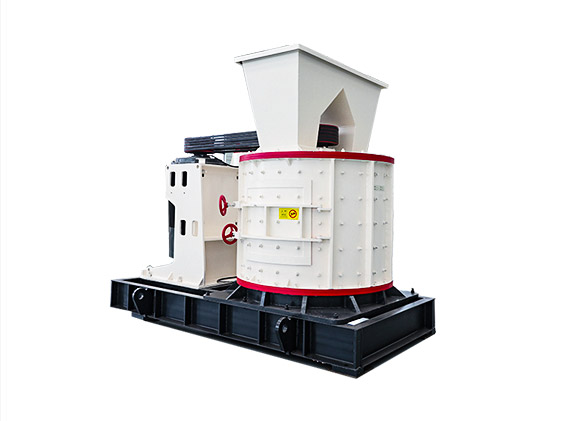 Impact Mill Crusher
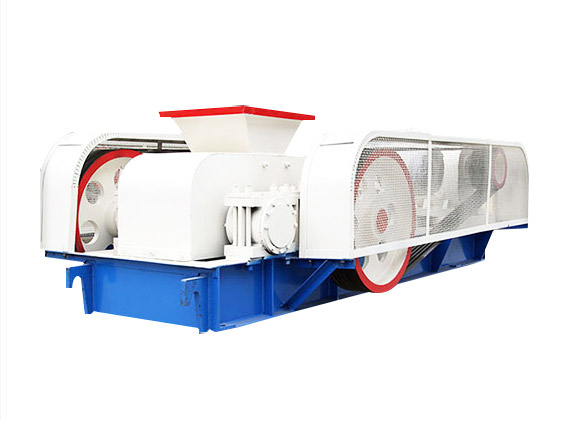 Roll Crusher
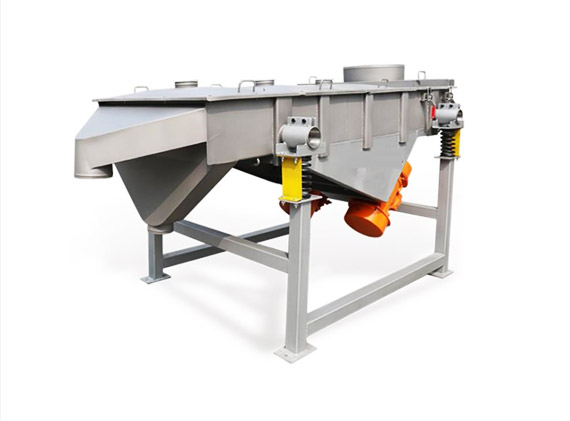 Linear Vibrating Screen Machine
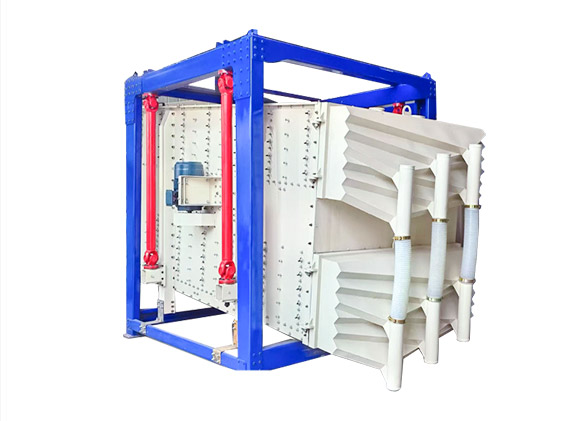 Swing Screen Machine
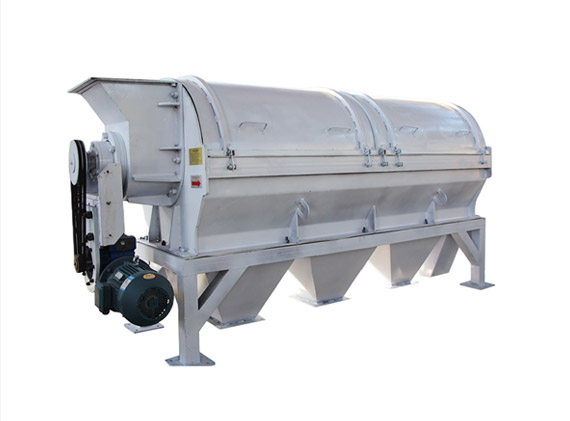 Tumbler Screen Machine
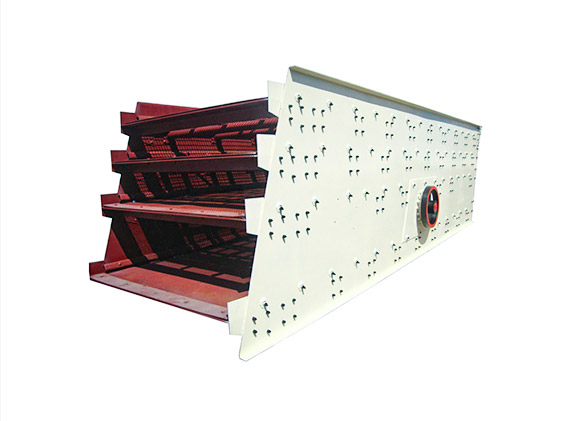 Circular Vibrating Screen
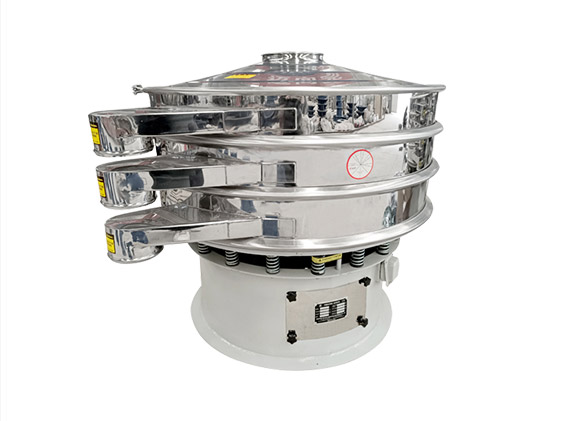 Cylindrical Rotary Vibrating Screen
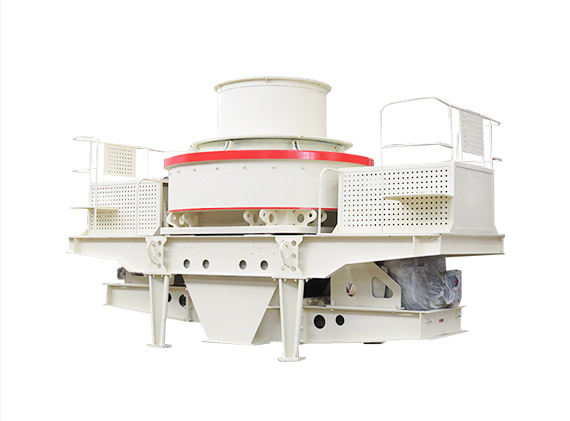 Sand Making Machine
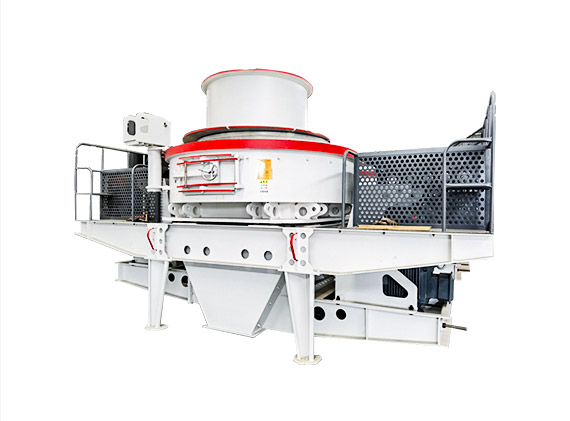 VSI Sand Making Machine
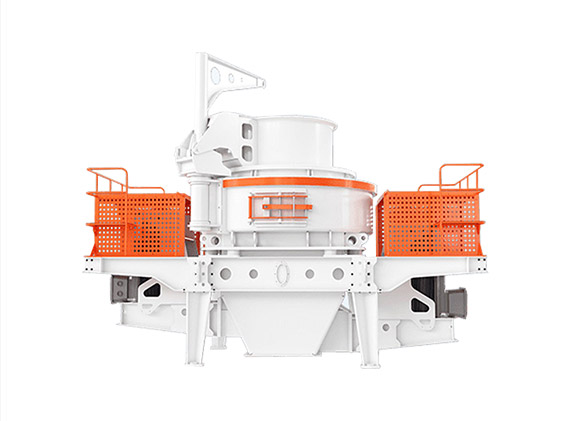 Impact Sand Making Machine
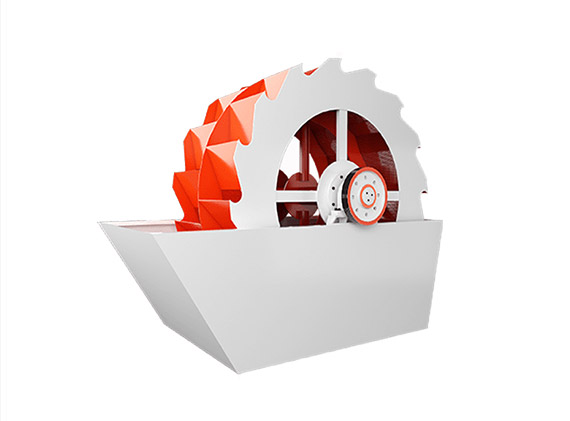 Sand Washing Machine
 Vibrating Feeder
 U-Shape Screw Reamer
 Belt Conveyor
 Horizontal Carbonization Furnace
 Wood Charcoal Carbonization Furnace
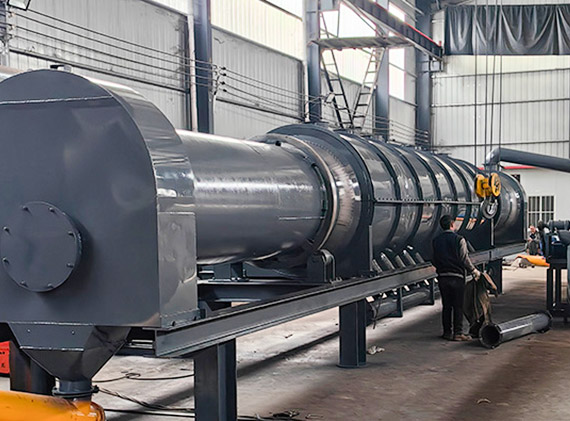 Waste Carbonization Furnace
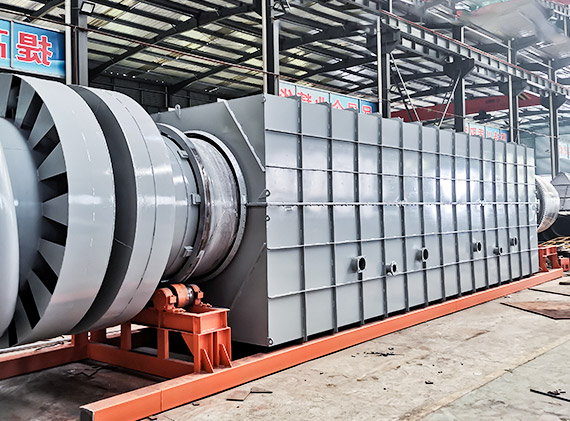 Sludge Continuous Carbonization Furnace
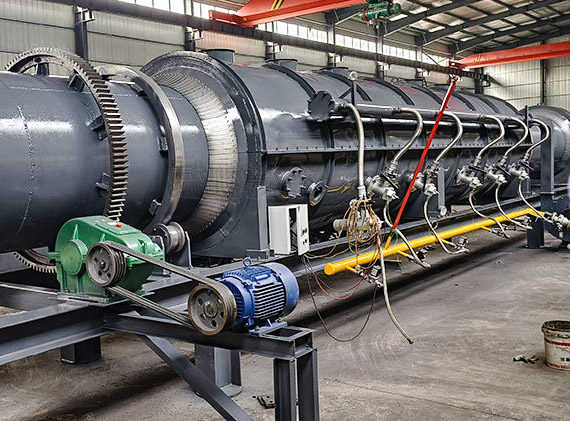 Biomass Carbonization Furnace
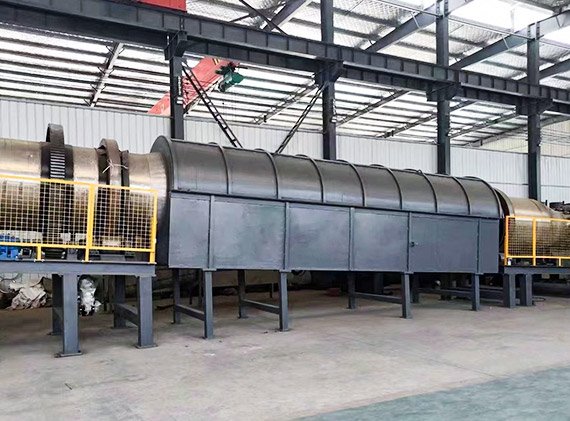 Coconut Shell Carbonization Furnace
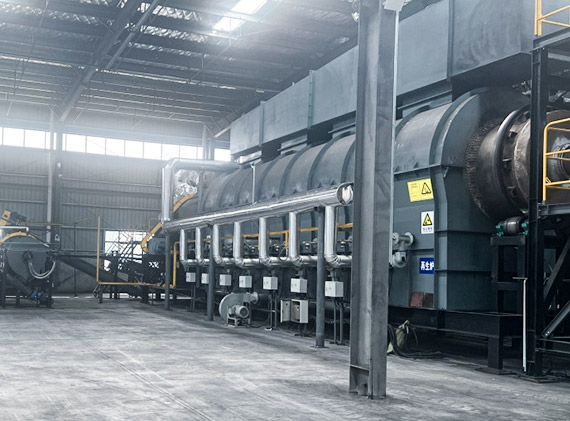 Continuous Carbonization Furnace
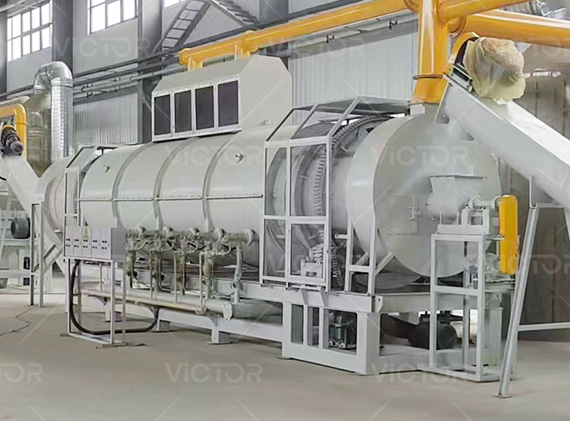 Biomass Pyrolysis Furnace
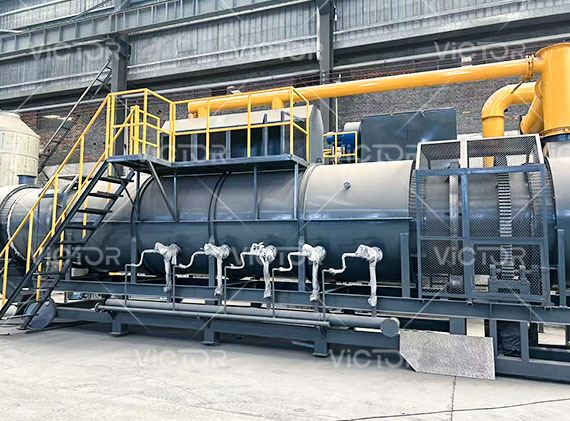 Lithium Battery Recycling Pyrolysis Furnace
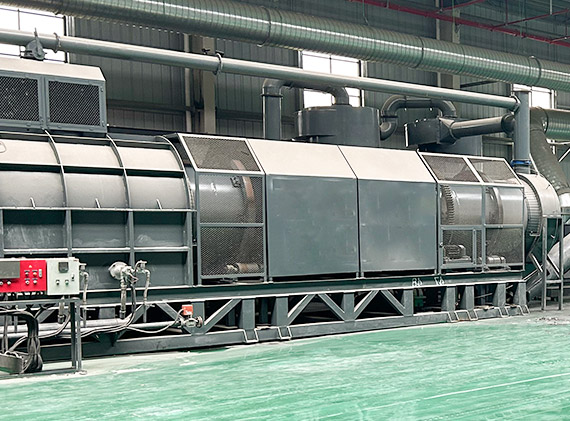 Solar PV Panel Recycling Pyrolysis Furnace
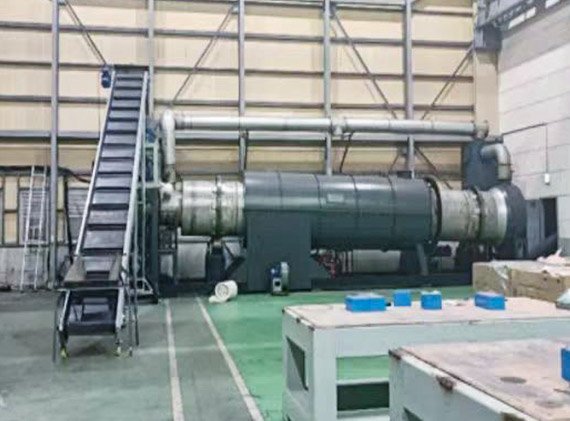 PCB Recycling Pyrolysis Furnace
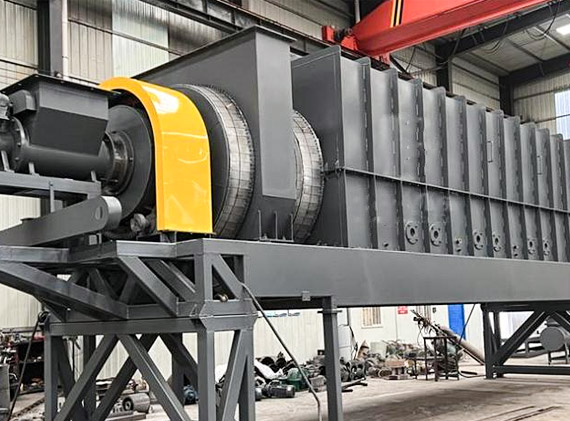 Carbonization Paint Removing Furnace
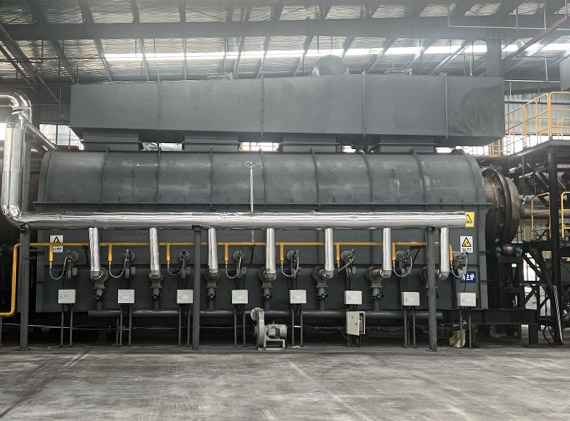 Capacitor Continuity Pyrolysis Furnace
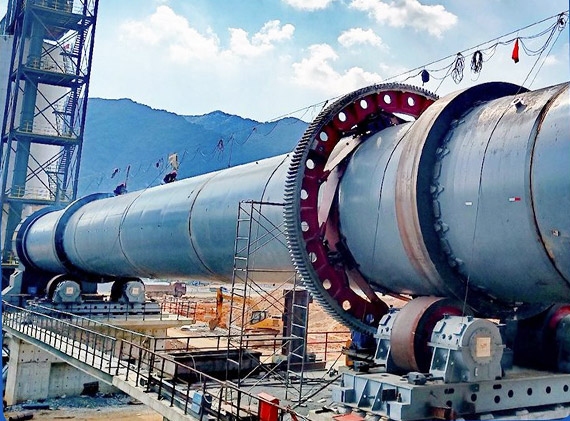 Rotary Kiln
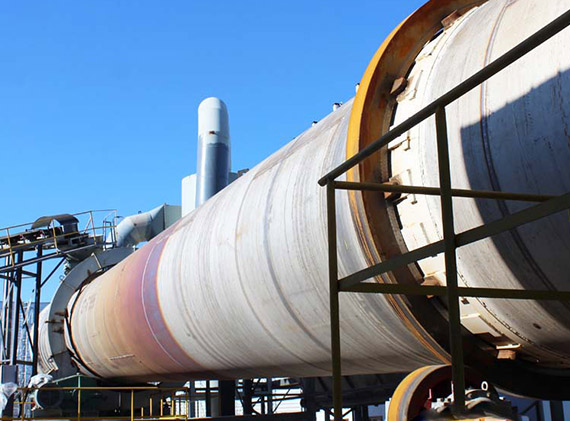 Waste Incineration Rotary Kiln
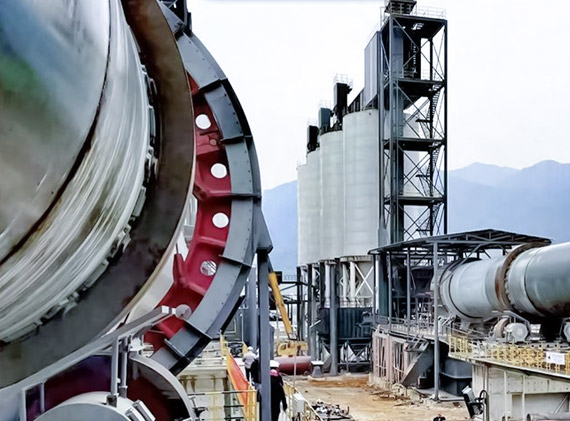 Metallurgical Rotary Kiln
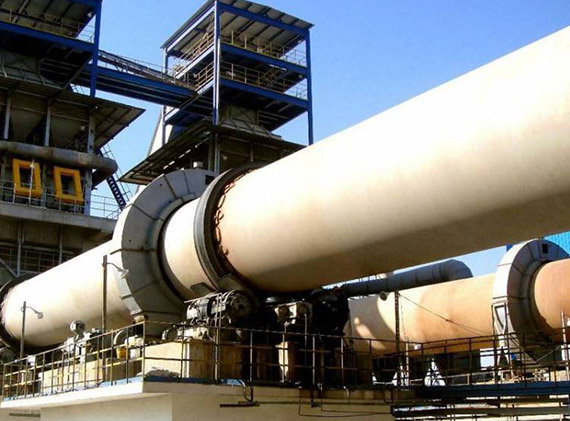 Cement Lime Rotary Kiln
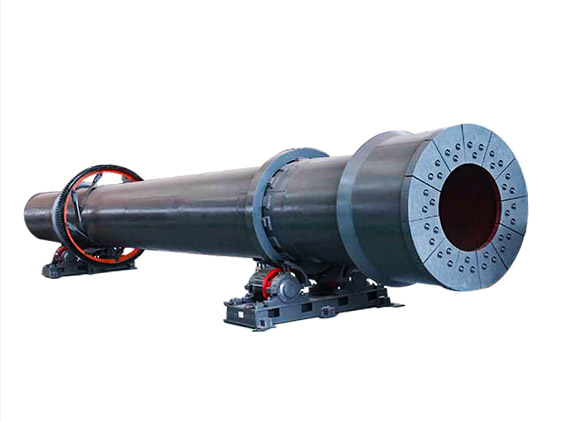 Rotary Drum Dryer Furnace
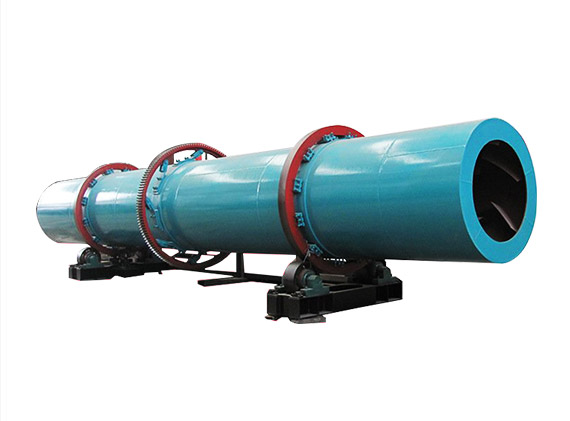 Drum Drying Dryer Furnace
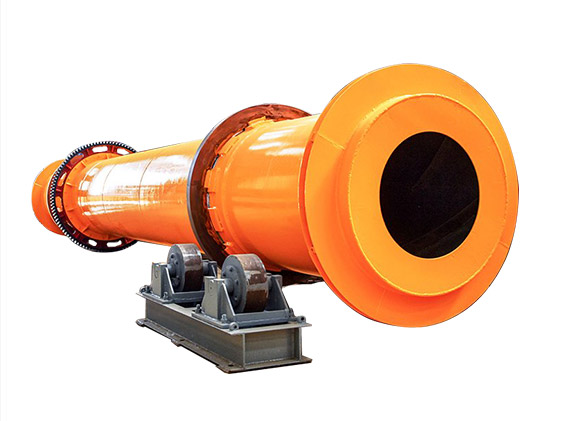 Industrial Dryer Furnace
 Lithium Battery Recycling Plant
 Solar Photovoltaic Panel Recycling Plant
 PCB Circuit Board Recycling Plant
 E Waste Recycling Plant
 Blog
Blog Company Blog
 Knowledge
 FAQ
FAQ